
Shed Removal & Demolition in St. Petersburg, FL
Shed removal takes down wood, metal and resin sheds and hauls the pieces off, including the floor and whatever is still stored inside. What sits underneath decides the rest – a shed on a concrete pad means the slab is quoted separately, since concrete prices by weight rather than volume. The structure itself is priced at $50 per cubic yard, quoted flat and in writing before work starts, and covers demolition, load-out and disposal. Any job carries a $150 minimum. Elephants Dumpster Rental & Junk Removal serves St. Petersburg and the surrounding Pinellas County area.
SERVING MOST LOCATIONS IN
- St. Petersburg
- Clearwater
- Tampa
- Pinellas County
- St. Petersburg
- Clearwater
- Tampa
- Pinellas County
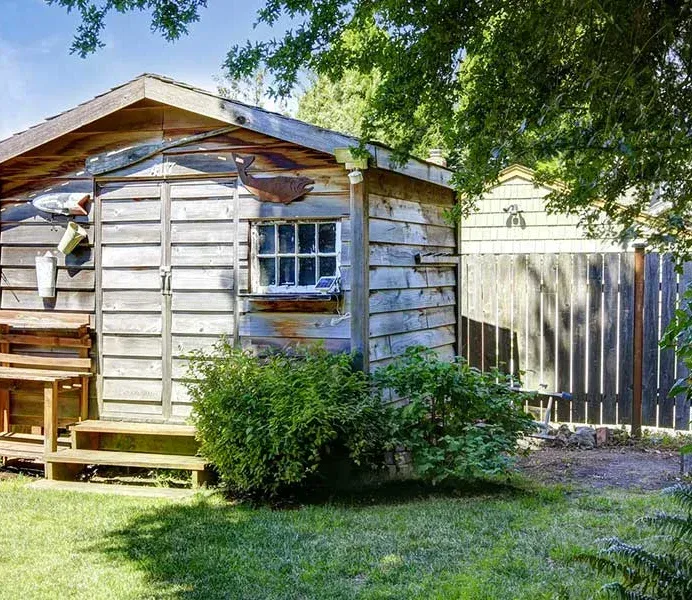
Expert Shed Demolition Services
Empty the shed, or tell us it is full and the contents are cleared as part of the job. The structure comes down in panels, with the floor and any ground anchors pulled. What is underneath decides the rest — gravel or dirt is left graded, while a concrete pad is quoted separately because concrete prices by weight. Elephants Dumpster Rental & Junk Removal handles it end to end.
Efficient Shed Removal Process
Our shed demolition and removal process is designed for maximum efficiency and safety. We offer a complete, full-service solution that covers every step from assessment to cleanup.
- Assessment and Quote: We start by carefully evaluating the shed and its environment, providing a detailed quote and removal plan tailored to ensure safety and efficiency.
- Demolition: Once you approve the quote, our skilled team will dismantle the shed with precision, adhering to all safety protocols.
- Debris Removal and Cleanup: After demolition, we swiftly remove all debris and thoroughly clean the area, leaving your property spotless and in excellent condition.
Eco-Friendly Hauling and Disposal
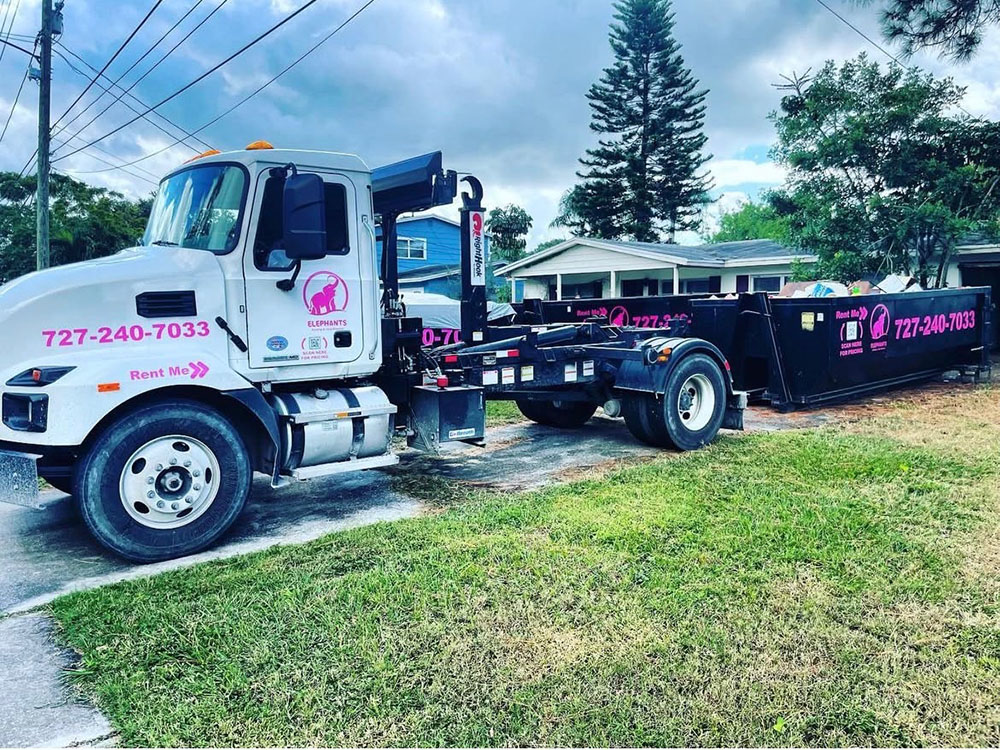
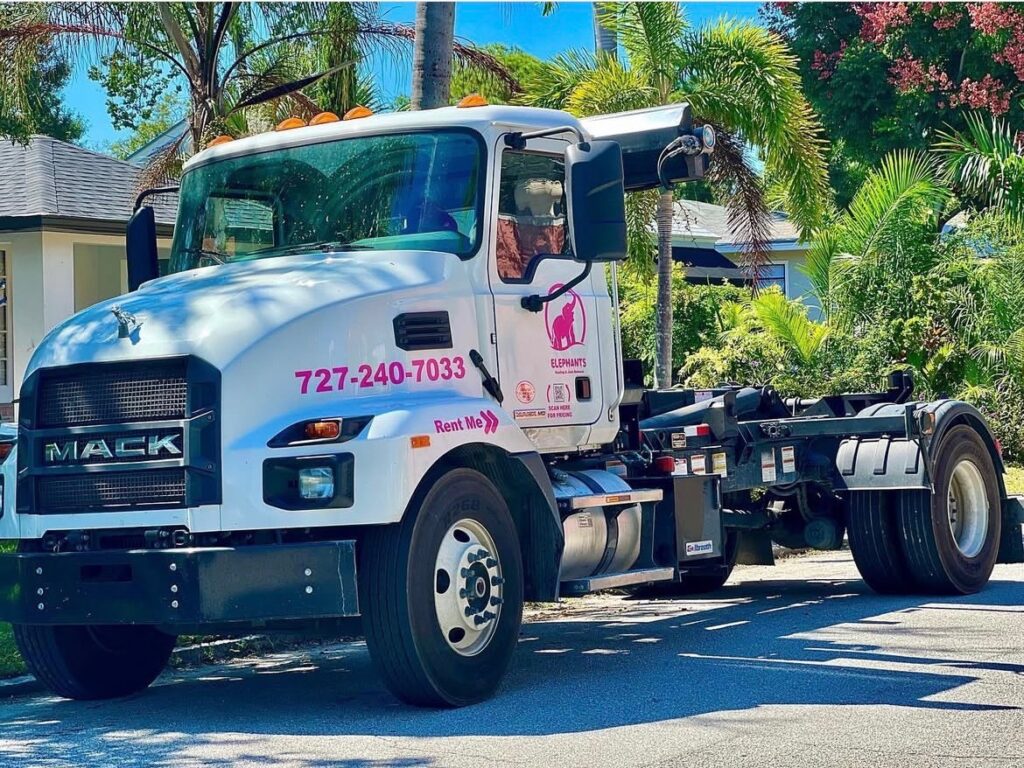
At Elephants Dumpster Rental & Junk Removal, we are committed to eco-conscious practices. Our robust trucks efficiently handle large loads, ensuring that all demolished materials are promptly removed from your property. We emphasize recycling and repurposing materials whenever possible, aiming to minimize our environmental footprint and support sustainability.
Comprehensive Outdoor Cleanup Solutions
Beyond shed demolition, Elephants Dumpster Rental & Junk Removal provides a full suite of outdoor cleanup services to enhance your project:
- Junk and Trash Removal: We efficiently clear out clutter or waste from inside and around your shed.
- Yard Debris Removal: Our team handles garden waste, branches, and other lawn debris.
- Hot Tub Removal: For a complete backyard overhaul, we also offer streamlined removal of old spas and hot tubs.
Transparent and Affordable Pricing
Elephants Dumpster Rental & Junk Removal is dedicated to offering clear and affordable pricing for shed demolition in Pinellas County.
- • Instant Quote: We provide a prompt, on-site estimate to give you a precise cost for your shed removal.
- All-Inclusive Pricing: Our quotes cover all aspects, including labor, disposal, and any additional costs.
- Competitive Rates: As a local St. Petersburg business, we are committed to delivering fair and competitive rates for our community.
- Easy Payment Options: We accept various payment methods, including cash, checks, and cards, to ensure your convenience.
Effortless Booking and Rapid Service
Scheduling your shed removal with Elephants Dumpster Rental & Junk Removal in St. Petersburg is simple and convenient.
- Online Booking: Use our intuitive online system to schedule your appointment from any device, anytime.
- Personalized Service: Contact our local office for tailored assistance and answers to any queries. We’re here to support you!
- Fast and Reliable: Enjoy same-day and next-day appointments throughout Pinellas County. We ensure punctuality with our 2-hour arrival windows and courtesy calls.
What Shed Removal and Demolition Actually Involves
Most homeowners think of it as “getting rid of the shed.” In practice, a shed removal in Pinellas County is four separate jobs stacked on top of each other, and skipping any one of them is what turns a Saturday project into a month-long headache.
- Emptying the shed. Decades of paint cans, bicycles, lawn equipment, pool chemicals and cardboard have to come out and be sorted before a single wall comes down.
- Dismantling the structure. Roof first, then siding, then framing, then the floor. Done in the wrong order, a shed can drop on itself, on a fence, or on the person holding the pry bar.
- Dealing with the foundation. Wooden skids lift out. Concrete blocks stack up fast. A poured concrete slab with footers is a different job entirely and needs to be priced separately.
- Hauling every last piece away. Nails, glass, shingle grit, tie-down straps and the shed itself all have to leave in a truck, not sit in a pile at the curb.
We handle all four in one visit. You point at the shed, tell us whether the slab stays or goes, and we bring the crew, the truck and the dump fees. If you would rather load at your own pace, a roll-off dumpster rental parked in your driveway is often the cheaper route.
Every Type of Shed We Tear Down and Haul Away
Shed construction in Florida varies wildly, and the material dictates the method, the crew size and the disposal path.
Wood and Framed Sheds
The most common shed in older St. Petersburg and Gulfport neighborhoods. Florida humidity and termites work on the sill plate and floor joists from underneath, so a wood shed that looks fine can be structurally rotten at the base. These come apart in panels when they are sound and get flattened carefully when they are not. Clean, untreated lumber can often be separated for recycling; pressure-treated and painted wood cannot.
Metal and Steel Sheds
Thin galvanized panels are light but genuinely dangerous. Every cut edge behaves like a blade, panels catch wind like a sail, and rusted-through sheeting tears instead of bending. On the upside, a metal shed is almost entirely recyclable, which is why we route the sheeting and the frame through scrap metal removal rather than the landfill.
Vinyl and Resin Sheds
Plastic sheds are the fastest to disassemble and the most likely to have become brittle. After a decade of Florida UV exposure, resin panels shatter rather than flex. They snap apart quickly but generate a surprising volume of lightweight debris that has to be contained so it does not blow across the yard.
Prefab Kit Sheds and Barn-Style Buildings
Delivered as a finished building and set on blocks or a slab, these are the ones most often anchored with ground augers or hurricane tie-down straps. Those anchors are set deep, and cutting them loose properly is part of the job.
Site-Built Sheds and Backyard Workshops
A shed framed on site, wired for power, insulated and drywalled is functionally a small building. It usually sits on a real foundation, it usually has an electrical feed that must be disconnected by a licensed electrician, and it is the category most likely to require a demolition permit. Larger versions overlap with garage demolition and light demolition.
Carports, Lean-Tos and Pole Structures
Open structures with posts set in concrete. The frame comes down quickly; the buried post footings are the part that takes the time.
Greenhouses, Sunrooms and Screen Enclosures
Glass and polycarbonate glazing has to be pulled and contained before any framing moves. Broken glass in a backyard where kids and dogs play is the outcome we work hardest to avoid.
Playhouses, Clubhouses and Treehouses
Often built by hand with no plans and fastened directly into a living tree. These get taken apart from the top down. If yours is attached to a play structure, see playset removal and trampoline removal, which we can knock out on the same trip.
Do You Need a Permit to Demolish a Shed in Pinellas County?
This is the question that trips up almost everyone, and the honest answer is: it depends on the size of the shed, the foundation under it, and which jurisdiction you are in. Here is how the lines are actually drawn.
The 100-Square-Foot Line
Pinellas County treats 100 square feet as the dividing line for accessory structures. The county’s residential permit list includes a category for an “Accessory Structure (shed more than 100 sq. ft.)”, separate permit types for “Shed Prefab Tie-down Only” and “Shed Site Built”, and a standalone Demolition permit type. Sheds with a foundation under 100 square feet still fall under the county’s Development Review process, which requires a Zoning Clearance. You can read the current categories on the county’s Residential Permits page and the Pinellas County Permitting Guide.
Demolition Is Its Own Permit Category
Tearing a structure down is not treated as a minor repair. Demolition appears as its own residential permit type in Pinellas County. A shed sitting loose on skids in an unincorporated backyard is a very different case from a wired, slab-mounted workshop, and the building department is the only office that can tell you which one you have.
Zoning, Setbacks and What Goes Back in That Spot
Pinellas County specifically advises homeowners to confirm zoning and setback requirements for sheds, fences and similar additions. This matters most when you are replacing rather than simply removing. A shed that has stood in the same corner for thirty years may be grandfathered where a brand-new one could not legally go. Once you demolish it, that legal non-conforming status can disappear. If a replacement is part of your plan, verify the setbacks before the old one comes down, not after.
City Limits Change the Rules
Pinellas County’s building department covers unincorporated areas. If your address is inside St. Petersburg, Clearwater, Largo, Pinellas Park, Seminole or any other incorporated municipality, that city’s building department has jurisdiction and its own thresholds, fees and forms. Two houses on opposite sides of the same street can genuinely have different requirements.
Who Is Allowed to Do the Work
Florida defines demolition work inside its contractor licensing statute. Under Florida Statute 489.105(3), the term “demolish” is applied to steel tanks over 50 feet in height, towers over 50 feet, other structures over 50 feet, and all buildings or residences. Whenever a permit is pulled, the county will tell you what class of licensed contractor has to be on it. Ask for that answer in writing rather than assuming.
The 811 Utility Locate Rule Nobody Should Skip
The moment a shed removal involves digging, whether that is pulling ground anchors, breaking a slab, or excavating post footings, Florida law applies directly to you.
Florida Statute 556.105(1)(a) requires notice to the free statewide locate service not less than two full business days before beginning any excavation or demolition that is not beneath state waters. If the work is beneath state waters, the notice period jumps to ten full business days. That is the law, not a courtesy.
Why this matters in a backyard: sheds are the single most common place homeowners run shallow, unpermitted electrical or water lines. A previous owner trenching eight inches deep to power a shed light is not on any utility map. Add irrigation lines, low-voltage landscape lighting and septic laterals, and the average Pinellas backyard has more buried in it than the plat suggests. Marking first costs nothing. Hitting a line costs a great deal.
Power feeding a shed must also be de-energized and disconnected at the source before demolition begins, and in most jurisdictions that is licensed electrician work. Cutting a live line with a reciprocating saw is exactly as bad as it sounds.
Asbestos in Older Sheds: The Rule That Catches Pinellas Homeowners Off Guard
If your shed was built or re-roofed before the mid-1980s, this section is the most important one on this page.
Where Asbestos Actually Hides in a Shed
Homeowners assume asbestos is an indoor, big-building problem. It is not. In outbuildings from that era it shows up in cement-asbestos board siding (commonly called transite), corrugated cement roofing panels, asphalt roofing felt and shingles, vinyl floor tile and the black mastic under it, and joint compound and textured coatings on any finished interior wall. Transite in particular was popular for utility buildings because it was cheap and fireproof, and it looks like nothing more than gray fiber board.
Pinellas County Requires a Written Survey First
Pinellas County’s Air Quality Division is direct about this: a written asbestos survey performed by a state-licensed asbestos consultant is required before renovation or demolition, and that survey must accompany the demolition notification. The details are published on the county’s Asbestos Notification Requirements page. Two points on that page surprise almost everyone:
- All demolitions require notification, even when no asbestos is present. “There isn’t any asbestos in it” is a conclusion a licensed consultant reaches, not one a homeowner declares.
- A building permit or advisory statement from your local building department does not satisfy the asbestos notification requirement. They are two separate filings with two separate offices. Having the permit in hand does not mean you are covered.
The Ten-Working-Day Clock
Notification must be submitted at least ten working days (roughly two calendar weeks) before demolition begins. Critically, that clock does not start until the notification, the fees and the survey have all been received. Submit an incomplete package and you have not started the countdown at all. Where a building official determines a structure is structurally unsound and in danger of imminent collapse, a shortened one-day notification path exists.
Who the County Holds Responsible
Responsibility is deliberately broad. It falls on any person who owns, leases, operates, controls or supervises the facility or the demolition operation, which the county spells out as including owners, consultants, contractors and subcontractors. The homeowner is not a bystander in that list.
The Residential Exemption and Its Limits
Under the federal Asbestos NESHAP at 40 CFR Part 61 Subpart M, residential buildings with four or fewer dwelling units are excluded from some provisions. The exemption has a hard limit: it does not apply if the structure is part of a larger commercial or public demolition project. For renovation work, the reporting thresholds are 260 linear feet on pipes, 160 square feet on other surfaces, or 35 cubic feet where the amount cannot otherwise be measured.
Because a backyard shed sits right on the boundary of these definitions, the only correct move is to call Pinellas County Air Quality at (727) 464-4422 or email asbestos@pinellas.gov and ask about your specific structure. It is a short phone call. Guessing wrong on an asbestos demolition is not a small mistake. If any asbestos is confirmed, removal must be performed by a Florida-licensed asbestos contractor, and regulated waste has to be adequately wetted, sealed leak-tight, labeled, and taken to a landfill qualified to receive it.
None of this is legal advice. It is general guidance to help you ask your building department and the county’s air quality office the right questions before work begins.
Shed Foundations: Skids, Blocks, Piers and Slabs
What sits underneath the shed changes the quote more than the shed itself does. Decide this before you book, because it determines the crew, the equipment and the truck.
Wooden Skids and Runners
Pressure-treated 4×4 or 4×6 runners resting on the ground or on gravel. The easiest case. The runners lift out with the floor and leave behind two shallow depressions and a rectangle of dead grass.
Concrete Blocks and Pavers
Very common in Pinellas. Anywhere from four to twenty blocks, sometimes half-sunk and invisible under sod. Every block has to be dug out and hauled, and concrete is heavy, so a modest pile adds real weight to the load.
Concrete Piers and Ground Anchors
Poured piers and helical ground augers for hurricane tie-downs are set well below grade. These have to be excavated or cut off below grade so nobody catches a foot or a mower blade on a stub later.
Poured Concrete Slabs
A slab is the fork in the road. Leaving the slab is the cheaper option and makes sense if you plan to set a new shed, a patio, a hot tub or a grill station there. Removing the slab means breaking it up and hauling it out, and if it has footers or embedded rebar around the perimeter it is meaningfully more work. Concrete is also one of the heaviest materials we haul, which is why slab removal is quoted separately. See concrete removal for how we handle that side of it.
Restoring the Footprint
Whatever the foundation was, you are left with a bare rectangle. We rake the area out and clear the debris so you have a clean, safe patch of ground. We do not lay sod or pour new concrete, and any hauler who promises full landscape restoration as part of a demolition price is worth a second look.
What Happens to Your Shed After It Leaves the Property
A shed is not one material, so it does not have one destination. Sorting on site is what keeps the amount going to a landfill down.
- Steel, aluminum and galvanized sheeting go to a metal recycler. This is the highest-value stream in a shed teardown, and it is why a metal shed often prices out better than a wood one.
- Clean, untreated lumber can be separated for recycling. Pressure-treated, painted or stained wood cannot, because of the chemistry in the treatment.
- Concrete, block and masonry route to construction and demolition processing, where they are crushed for reuse as aggregate and fill.
- Usable contents, meaning furniture, tools and bikes that still work, get set aside for donation rather than thrown in the truck.
- Household hazardous waste, including old paint, pool chemicals, pesticides, solvents, propane tanks and car batteries, has to go to a household hazardous waste facility. These cannot legally go in a dumpster or a standard trash load. Flag them for us and we will tell you exactly where they need to go.
Everything genuinely left over enters the Pinellas County waste system. The county follows the EPA’s Waste Management Hierarchy, sending material to its Waste-to-Energy Facility first, where burning reduces volume by roughly 90 percent and generates electricity, with Bridgeway Acres Landfill used as a last resort. The Solid Waste Disposal Complex is at 3095 114th Ave. N. in St. Petersburg. Related streams we handle the same way include construction debris removal, yard debris removal and electronics recycling.
How to Prepare for Shed Removal Day
Ten minutes of prep is the difference between a one-hour job and a three-hour one. Nothing here is complicated.
- Empty the shed, or tell us you want us to. Either is fine. What causes problems is a half-empty shed nobody mentioned, because contents change the volume and the price.
- Pull out anything you are keeping. Once demolition starts, that lawnmower is inside a pile. Take the bikes, tools and holiday decorations out first.
- Separate hazardous items. Set paint, chemicals, propane tanks and batteries to one side where we can see them.
- Clear a path from the shed to the street. Move cars, trash cans, planters and hoses. Unlock or prop the gate and measure the gate width if you know it is tight.
- Tell us about the ground. Soft sod, a septic tank, a drain field, irrigation heads, a paver walkway or a new driveway all change where we can park and walk.
- Sort out the utilities. If the shed has power or water, arrange disconnection in advance. This is the single most common reason a shed removal has to be rescheduled.
- Confirm your permit and notification status. If a demolition permit or an asbestos notification applies, those have to be in place before the work day, not the morning of.
- Secure pets and plan for kids. There will be nails, glass and sharp metal edges on the ground for part of the day.
- Check with your HOA. Many Pinellas communities restrict work hours and dumpster placement. See our HOA services if you manage a community rather than a single home.
What Drives the Cost of Shed Removal in Pinellas County
We quote per job rather than off a chart, because two 10×12 sheds can be very different jobs. These are the factors that actually move the number, listed roughly in order of impact:
- Size and volume. An 8×8 garden shed and a 12×24 workshop are not close. Volume drives truck space, and truck space drives price.
- Construction material. Metal is light and recyclable. Wood is heavier. Concrete is the most expensive material by weight we haul.
- Whether the slab goes. Frequently the largest single line item on a shed job.
- Contents. A shed packed to the ceiling is two jobs: a cleanout and a demolition.
- Access. Backyard behind a narrow gate, up a slope, or across soft ground means everything is carried by hand. A shed beside the driveway is far cheaper to remove than an identical shed 150 feet back.
- Condition. Collapsed, storm-damaged or rotted structures take longer and require more care, not less.
- Asbestos or hazardous material. If a survey confirms asbestos, licensed abatement is a separate specialty cost and a separate timeline.
- Disposal weight. Landfill and processing fees are charged by the ton, and those fees are part of every honest quote.
If you want to control the cost yourself, load a dumpster on your own schedule. Our 10-yard and 15-yard containers fit most single-shed teardowns; a 20-yard or 30-yard makes sense when the slab is coming out too. Current options are on our pricing page.
Shed Removal After Hurricane or Storm Damage
On the Pinellas peninsula this is a large share of the shed work we do. Sheds are the first structure on a property to fail in high wind, because they are light, tall for their footprint and often anchored only by their own weight.
A storm-damaged shed is more dangerous than an intact one, not less. Partially collapsed framing holds stored tension and can shift without warning. Metal sheeting peeled loose becomes a blade in the next gust. Waterlogged contents grow mold within days in Florida heat. If the structure is leaning, sagging or partly down, stay out of it and rope the area off.
Two things to handle early. First, photograph everything before anyone touches it, from several angles, including the interior if it is safe to see in from outside. Insurance adjusters need to see the damage as it was. Second, if a building official has determined the structure is structurally unsound and in danger of imminent collapse, the shortened one-day asbestos notification path may apply instead of the standard ten working days. Ask them directly.
Note that flood-damaged and wind-damaged are different claims with different coverage, and a detached shed is often treated separately from the house under a policy. Read the actual policy language rather than assuming. For the wider cleanup, see hurricane debris removal and fence removal, since fences and sheds usually come down in the same storm.
How Long Does Shed Demolition Take?
The teardown itself is fast. The paperwork is what sets the calendar.
- Quote: usually same day by phone or from photos you send. A site visit if there is a slab or access question.
- Permit, if one applies: days, and it depends entirely on your building department’s queue.
- Asbestos survey, if one applies: the consultant’s schedule plus lab turnaround.
- Asbestos notification, if one applies: at least ten working days, and the clock only starts once the notification, fees and survey are all in.
- 811 utility locate: not less than two full business days before any digging.
- The actual removal: a small garden shed is often two to four hours. A large site-built workshop can run a full day.
- Slab removal: add time and equipment. Frequently a second visit.
Where nothing regulatory applies, a simple shed removal can often happen within a day or two of your call, and sometimes the same day. Where an asbestos notification does apply, plan on two to three weeks minimum and start the process now rather than the week you want it gone.
Shed Removal DIY vs. Hiring a Crew
Plenty of people tear down their own shed successfully. It is worth knowing what the DIY route actually costs before you commit a weekend to it.
The tools alone: pry bars, a reciprocating saw with demolition blades, a sledgehammer, impact driver, cut-resistant gloves, eye protection, a respirator and steel-toed boots. Then the disposal problem, which is the part that surprises people. Curbside collection will not take a demolished shed. Municipal bulk pickup programs almost universally exclude construction and demolition debris, so you are either making repeated trips to the Solid Waste Disposal Complex in a borrowed truck and paying tipping fees by weight, or renting a container anyway.
Then the risks: rusted metal edges, hidden live wiring, nails through the sole of a sneaker, a wall panel dropping on a foot, and the possibility that the gray siding you are breaking up with a hammer is cement-asbestos board you just turned into airborne dust. That last one is the reason we tell people to get the survey.
Our honest position: a small, empty, blocks-only plastic or metal shed is a reasonable DIY project for someone with the tools and a way to dispose of the material. A wood shed built before the mid-1980s, anything wired for power, anything on a slab, and anything storm-damaged is not.
Services We Combine With Shed Removal on the Same Visit
Sheds rarely stand alone. If any of this is on your list, group it into one trip and one price rather than booking separately:
- Playset and swing set removal and trampoline removal
- Fence removal and deck demolition
- Hot tub and spa removal
- Garage cleanouts and storage cleanouts
- Concrete and slab removal
- Yard debris removal and scrap metal removal
- Appliance removal and electronics recycling
- Garage demolition, light demolition and interior demolition
- Home demolition, mobile home demolition and deconstruction
- Estate cleanouts, foreclosure cleanouts and eviction cleanouts
Where We Provide Shed Removal in Pinellas County
We cover Pinellas County and the surrounding Tampa Bay area, including St. Petersburg, Clearwater, Largo, Seminole, Pinellas Park, Dunedin, Palm Harbor, Safety Harbor, Oldsmar, Tarpon Springs, Gulfport, Treasure Island, St. Pete Beach, Madeira Beach, Indian Rocks Beach, Belleair, Kenneth City, South Pasadena, Tierra Verde, East Lake, Westchase and Tampa. The full list is on our service area page.
A shed is usually two jobs: the contents and the structure
The structure is the regulated part. Shed floors, framing and skids are typically pressure-treated, and Pinellas County treats treated lumber as a special-handling waste requiring an appointment — the same bracket as asbestos, sludge, soil and boats — carrying a $110 per load Special Handling Service Fee above the standard $58.86 per ton disposal rate. Appointments are booked on (727) 464-7500 and the fee schedule is public.
The contents are the part people forget to mention. Paint, fuel cans, pool chemicals and fertiliser are not container waste at all, and a shed that has been closed up for a decade usually holds several. Those go to the county household chemical centre, free for Pinellas households. Flag anything of that sort when you book and we will keep it out of the load rather than discovering it halfway through.
Our Shed Demolition Area: St. Petersburg, Clearwater, Tampa and Beyond
We run shed demolition hardest in St. Petersburg, Clearwater and Tampa, because that is where the crews already are. The rest of Pinellas County is not an afterthought either — we are on those roads every single day.
St. Petersburg, FL
St. Petersburg is home base, so shed demolition here usually gets the tightest window — often same day. We work Old Northeast, Historic Kenwood, Snell Isle, Shore Acres, Crescent Lake, Jungle Terrace, the EDGE District and downtown. The old bungalow blocks come with narrow driveways, brick streets and alley-only access, so we send the truck that actually fits instead of blocking your neighbors in. See the full St. Petersburg service page.
Clearwater, FL
We are in Clearwater constantly. shed demolition covers Downtown Cleveland Street, Skycrest, Del Oro Groves, Countryside, Northwood and the barrier island. The Memorial Causeway backs up badly in season, so we schedule beach jobs early in the morning instead of promising a window we would blow. Details on our Clearwater coverage.
Tampa, FL
Tampa gets the same crews and the same equipment as our Pinellas work. shed demolition covers Hyde Park, SoHo, Palma Ceia, Ybor City, V.M. Ybor, Old Seminole Heights, Sulphur Springs, Town & Country and Brandon. The historic districts have the same problem St. Pete does — brick streets, tight alleys, 1920s bungalows — and we bring the right truck for it. More on our Tampa junk removal coverage.
The Rest of Pinellas County
The rest of the county is standard route work, not a special trip. Mid-county we cover Largo, Pinellas Park and Seminole. North county is Dunedin, Palm Harbor, Tarpon Springs, Safety Harbor, Oldsmar and East Lake. The barrier islands are St. Pete Beach, Treasure Island, Madeira Beach, Indian Rocks Beach, Indian Shores, Redington Beach, Redington Shores, North Redington Beach, Clearwater Beach and Tierra Verde. We also serve Gulfport, Kenneth City, South Pasadena, Belleair, Belleair Beach, Belleair Bluffs, Belleair Shore, plus Westchase and Gandy across the bay. See the Pinellas County overview for the whole map.
Not sure whether your address is inside the line? Call 727-240-7033 and ask. We would rather tell you honestly that a job is outside our range than take a deposit and cancel on you.
Frequently Asked Questions About Shed Removal in Florida
Do I need a permit to demolish a shed in Pinellas County?
Often, yes. Pinellas County lists Demolition as its own residential permit type and treats 100 square feet as the threshold for accessory structures, with sheds under that size still going through Development Review for a Zoning Clearance. If your address is inside a city such as St. Petersburg, Clearwater or Largo, that city’s building department has jurisdiction and its own rules. Always confirm with the department that covers your specific address before work begins.
How much does shed removal cost?
It is quoted per job, because size, material, contents, access and the foundation all change the work involved. The largest cost drivers are whether a concrete slab is being removed, how much material is going to disposal by weight, and whether the crew has to hand-carry everything from a back corner of the yard. Send photos and dimensions and you can usually get a number the same day.
Do you remove the concrete slab under the shed?
Yes, but it is quoted separately from the shed. Concrete is the heaviest material we haul, and slabs with perimeter footers or embedded rebar are meaningfully more work. Many customers keep the slab because it becomes a ready-made pad for a new shed, a patio or a hot tub.
Can you remove a shed that is still full of belongings?
Yes. Just tell us up front so the quote reflects it, because contents change the volume. Pull out anything you want to keep first, and set aside paint, pool chemicals, propane tanks, pesticides and batteries, which cannot go in a standard load and must go to a household hazardous waste facility.
My shed was built in the 1970s. Do I need to worry about asbestos?
You should take it seriously. Older outbuildings can contain cement-asbestos board siding, corrugated cement roof panels, roofing felt and floor tile mastic. Pinellas County requires a written survey by a state-licensed asbestos consultant before demolition, and that survey must accompany the notification. Call Pinellas County Air Quality at (727) 464-4422 about your specific structure. Do not break up suspect material yourself.
How long does the whole process take?
The teardown is the fast part: a small garden shed is often two to four hours, and a large site-built workshop can take a full day. The calendar is set by paperwork. An asbestos notification requires at least ten working days, and that clock does not start until the notification, fees and survey are all submitted. An 811 utility locate requires not less than two full business days before any digging.
Do I need to be home when you remove the shed?
Not necessarily. As long as we have clear access, know exactly which structure is coming down, and have agreed on whether the slab stays, the job can be completed while you are out. We confirm the scope in writing beforehand so there is no ambiguity about what gets demolished.
Can you remove a shed that has already collapsed?
Yes, and this is common after storms. A collapsed shed is more hazardous than an intact one because damaged framing holds tension and can shift. Stay out of it, rope the area off, and photograph everything before anyone touches it if you are filing an insurance claim.
Is anything from the shed recycled or donated?
Yes. Steel, aluminum and galvanized sheeting go to a metal recycler, clean untreated lumber can be separated for recycling, and concrete and block route to construction and demolition processing to be crushed into aggregate. Usable tools, bikes and furniture are set aside for donation. What genuinely cannot be reused enters the Pinellas County system, which sends material to its Waste-to-Energy Facility first and uses the landfill as a last resort.
Should I just rent a dumpster and do it myself?
For a small, empty, metal or plastic shed sitting on blocks, that is a reasonable weekend project if you have a reciprocating saw, a pry bar and proper protective gear. We would not recommend it for a wood shed built before the mid-1980s, anything wired for power, anything on a slab, or anything storm-damaged. If DIY is the plan, remember that curbside and municipal bulk pickup will not take demolition debris, so you need a container or repeated trips with tipping fees either way.
Is shed demolition available in Tampa or only in Pinellas County?
Both. Tampa gets the same crews, trucks and pricing structure as our Pinellas work. We book shed demolition in Downtown Tampa, Water Street, Harbour Island, Davis Islands, Bayshore, Beach Park, Old Seminole Heights, Tampa Heights, Town & Country and Brandon. Because Tampa sits in Hillsborough County, disposal runs through Hillsborough facilities, so we quote Tampa jobs with that tipping cost included rather than surprising you later.
Do you cover Clearwater Beach and the condo towers for shed demolition?
Yes, and we do it constantly. Clearwater Beach, Sand Key and Island Estates buildings almost always require an elevator reservation, a certificate of insurance naming the association, and a set haul window. We carry current insurance and file the COI before the truck leaves. Mainland Clearwater — Countryside, Northwood, Del Oro Groves, Downtown Cleveland Street — is simpler and usually books faster.
What other Pinellas County cities do you cover?
Effectively all of them. Mid-county we run Largo, Pinellas Park and Seminole. North county is Dunedin, Palm Harbor, Tarpon Springs, Safety Harbor, Oldsmar and East Lake. The barrier islands run St. Pete Beach, Treasure Island, Madeira Beach, Redington Beach, Redington Shores, North Redington Beach, Indian Shores, Indian Rocks Beach and Clearwater Beach. Smaller municipalities like Gulfport, Kenneth City, South Pasadena, Tierra Verde and the four Belleair towns are covered too.
READY WHEN YOU ARE
GET A FLAT PRICE TODAY
Dumpster delivered or junk gone — often the same day. Call or text 727-240-7033, text photos for a price in minutes, or book online in about two minutes. Flat pricing, dump fees included, and a real person on the phone 24/7.