
Carpet Removal in St. Petersburg, FL
Carpet removal pulls up carpet, pad, tack strip and staples, typically scheduled within 24 hours. One room of carpet and pad rolls into a bundle about three feet across and 30 inches high and runs roughly three cubic yards, so a whole-house job takes a meaningful share of a truck. It is $50 per cubic yard of the space your load takes up, with $150 as the minimum charge, quoted flat before the first item moves. Elephants Dumpster Rental & Junk Removal serves St. Petersburg and the surrounding Pinellas County area.
SERVING MOST LOCATIONS IN
- St. Petersburg
- Clearwater
- Tampa
- Pinellas County
- St. Petersburg
- Clearwater
- Tampa
- Pinellas County
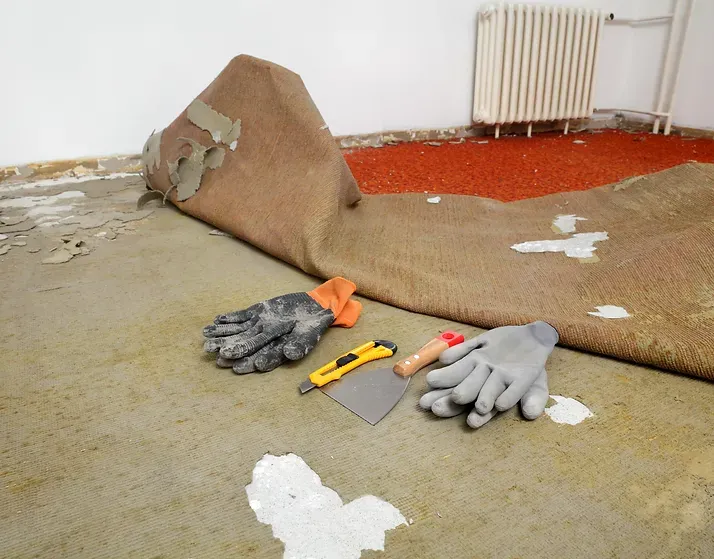
Carpet Removal in St. Petersburg
Carpet removal in St. Petersburg can be tough on your back, knees, and even your allergies. Once you’ve pulled it up, getting rid of all the materials can be a real headache. Let the carpet removal experts at Elephants Dumpster Rental & Junk Removal take care of the entire process for you!
We provide free, no-obligation carpet removal estimates on-site and offer same-day or next-day service. We’ll cut and remove the carpet and padding, load it onto our trucks, and dispose of it responsibly. All you have to do is show us what needs to go!
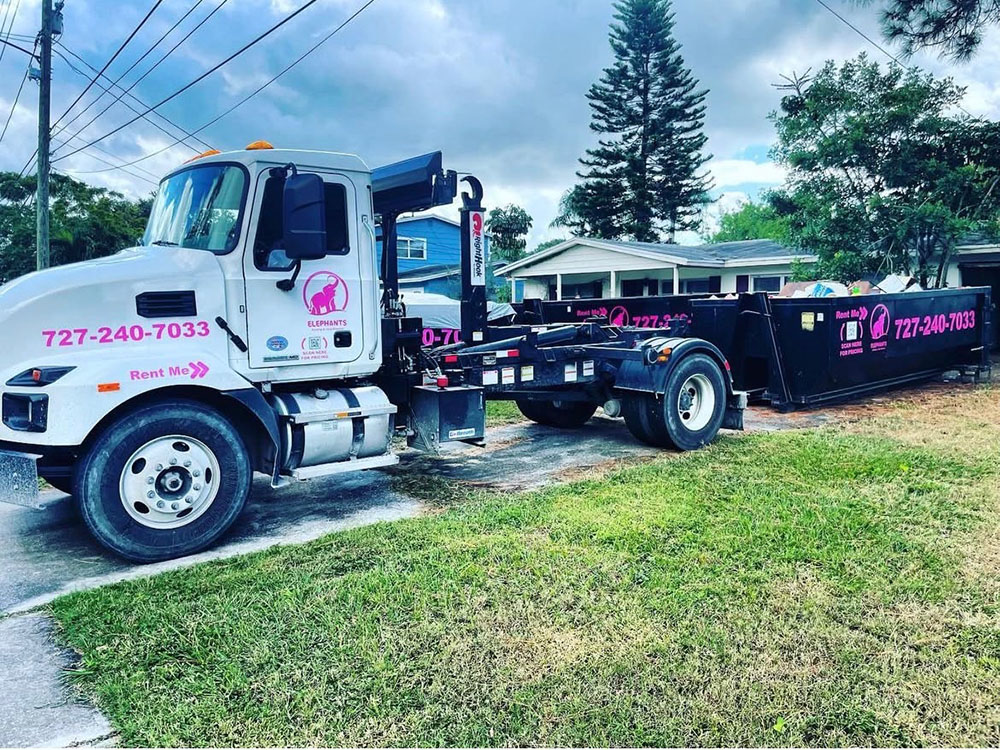
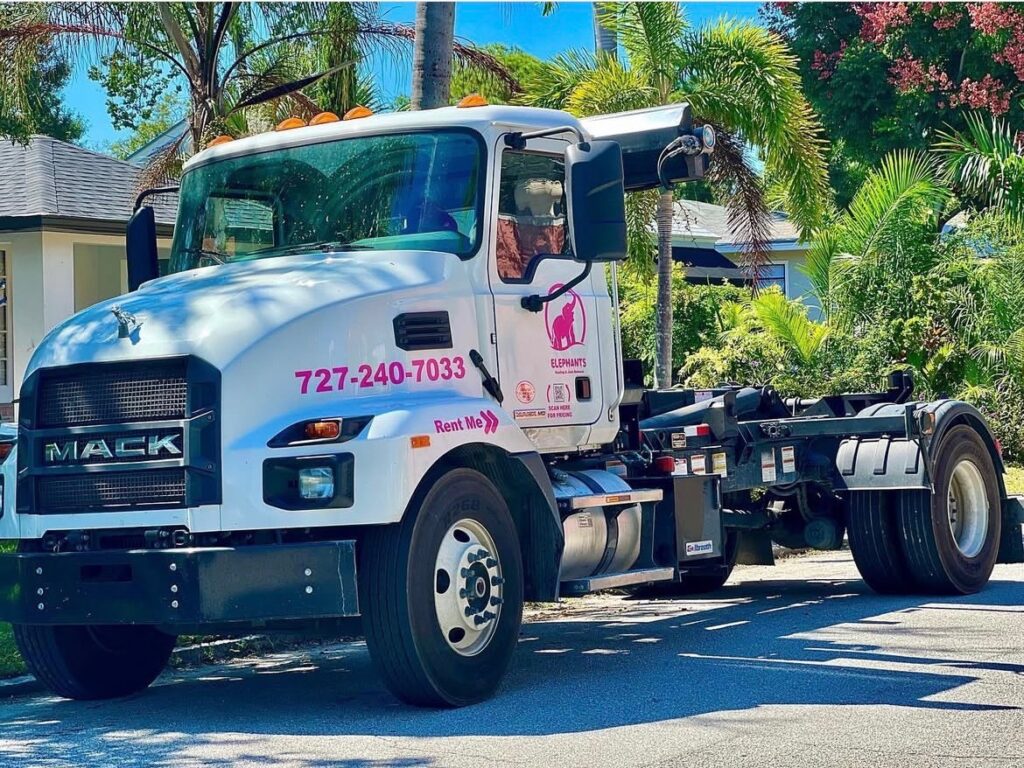
Carpet Removal When You Need It
Elephants Dumpster Rental & Junk Removal answers your calls 24/7, so you can always book an appointment when you need one. If you’re in a hurry, we offer same-day and next-day service. We’ll arrive on time and give you a heads-up call when we’re on our way, so you never have to wait around!
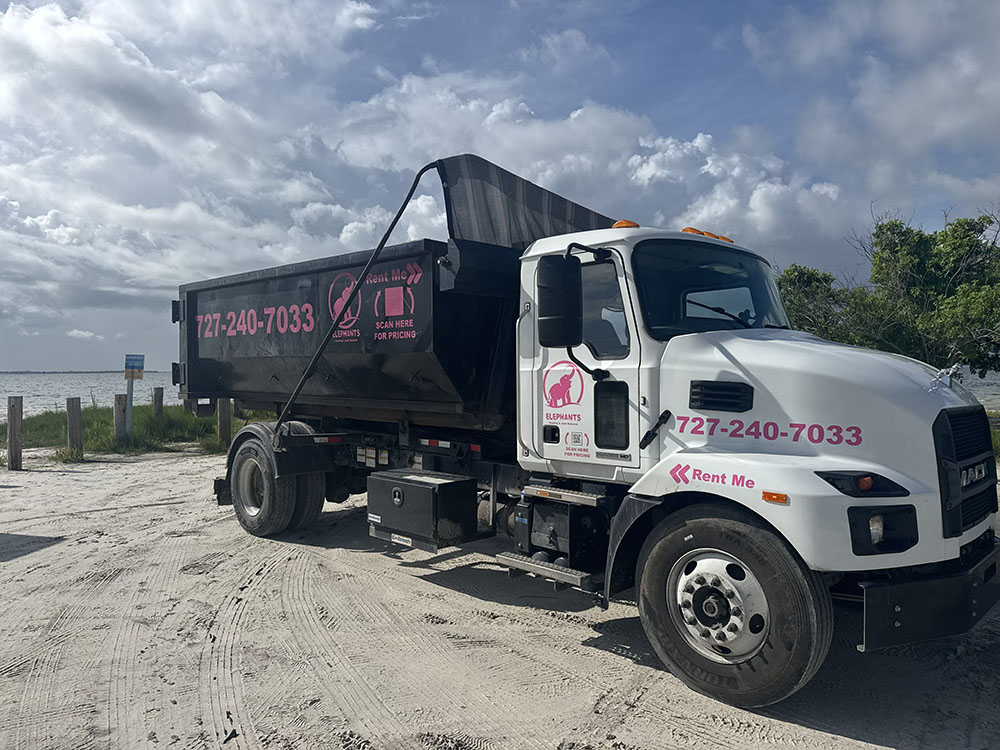
Carpet Removal Made Simple
Carpet removal is a labor-intensive, time-consuming, and messy job. From cutting the carpet and underlayment to rolling it up, loading it, hauling it, and disposing of it, the process can be overwhelming. Fortunately, Elephants Dumpster Rental & Junk Removal handles it all from start to finish, saving you time and energy!
Need Carpet Removal?
If you need carpet removal in St. Petersburg, here’s how it works:
- Call Elephants Dumpster Rental & Junk Removal or book an appointment online.
- We’ll provide a free, no-obligation estimate once we arrive.
- We’ll remove, load, and haul away your carpet and underlayment.
Settle up with cash, card, or check, and you’re all set!
Carpet Removal in St. Petersburg, FL: Tear-Out, Haul-Off, and Clean Subfloor
Carpet removal sounds like a one-step job and almost never is. Under that carpet sit a pad, hundreds of staples, tack strip nailed into the slab, sometimes glue, sometimes an older hard floor, and occasionally water damage nobody knew about. Elephants Dumpster Rental & Junk Removal handles carpet removal in St. Petersburg and across Pinellas County end to end: cut, roll, carry, load, haul, and leave you a swept subfloor ready for the next installer.
What Our Carpet Removal Service Includes
- Cutting and rolling the carpet into manageable sections so it clears doorways and stair turns without damaging your trim.
- Pad removal, including pad that has bonded to the slab and has to be scraped.
- Tack strip and staple removal — the step most people skip and then regret barefoot.
- Transition strip and metal edging removal at doorways.
- Sweeping and vacuuming the exposed subfloor so it is ready to inspect.
- Full haul-away and disposal at the county facility, with everything separated that can be.
Why Carpet Is Harder to Remove Than It Looks
Three things make carpet removal physical work rather than a quick pull.
Weight. Dry carpet and pad together are heavier than most people expect, and wet carpet can weigh several times its dry weight. A single soaked bedroom roll can genuinely require two people. This is why water-damaged jobs are quoted differently from dry ones.
Fasteners. Carpet is held by tack strip around the perimeter and staples through the pad. On a concrete slab — which is most of St. Petersburg — that tack strip is fastened with masonry nails or concrete pins. Pulling it without chipping the slab takes the right pry bar and some patience.
Adhesive. Glue-down carpet, common in offices, condos, and commercial corridors, has no pad at all. It comes up in strips and leaves adhesive residue that has to be scraped or ground depending on what is going down next. Tell us which type you have — glue-down takes noticeably longer than stretched-in carpet over pad.
Rooms and Property Types We Handle
- Single rooms: bedrooms, living rooms, home offices, and Florida rooms.
- Stairs, which are the slowest square footage in any house because every tread is a separate cut and every riser has its own staples.
- Whole houses before a sale, closing, or renovation — often bundled with a house cleanout.
- Apartments and rental turnovers on a deadline — see apartment services and property management services.
- Offices, retail spaces, and corridors with glue-down broadloom or carpet tile — see office cleanouts, retail cleanouts, and commercial junk removal.
- Estate, hoarding, and eviction properties where the carpet is only part of the job — see estate cleanouts, hoarding cleanouts, and eviction cleanouts.
How the Appointment Runs
- Call or text 727-240-7033 with the room count, approximate square footage, whether it is stretched-in or glued down, and whether it is wet. Photos help.
- Get a flat written quote. We price on the volume the load occupies in the truck plus the tear-out labor — not by the hour, so a slow stairwell does not inflate the bill.
- We protect the path. Runners and corner guards on the route from the room to the truck.
- Cut, roll, and carry. Sections sized to clear your doorways rather than force them.
- Strip the fasteners and sweep. You inspect a clean subfloor before we leave.
Need it fast? Ask about same-day junk removal. Just one room and you have already pulled it up yourself? Curbside junk pickup or single item pickup is usually cheaper.
Wet Carpet in Florida: The 24-Hour Rule and What the Law Says About Mold
Most urgent carpet removal calls in Pinellas County start with water — a supply line, a slab leak, a failed AC drain pan, wind-driven rain, or storm surge. The timeline here is genuinely short, and it is not our opinion. It is federal guidance.
EPA: 24 Hours Is the Line
Per EPA flood cleanup guidance, mold can grow on wood, drywall, carpet, and furniture if they remain wet for more than 24 hours. EPA also notes that flood water can carry bacteria, chemicals, and other hazards, and its sorting rule is blunt: you can usually clean and dry materials that do not soak up water, and you should throw away materials that soak up a lot of water and cannot be cleaned and dried. Carpet and carpet pad are the textbook example of the second category.
EPA on Carpet Specifically
The EPA mold cleanup guidance reinforces it. EPA states that absorbent or porous materials such as ceiling tiles and carpet may have to be thrown away if they become moldy, because mold grows into the crevices of porous material and can be difficult or impossible to remove completely. EPA adds three warnings that matter on a carpet job:
- Act quickly. Mold damages what it grows on, and the longer it grows the worse the damage.
- Do not run a contaminated HVAC system — it can spread spores through the whole building.
- Sewage or other contaminated water requires a professional experienced with that category of loss. Carpet soaked by a sewage backup is not a DIY job and is not salvageable.
The Florida 10-Square-Foot Threshold
Florida licenses mold work, and the trigger is a specific area. Under Florida Statute 468.8411, mold assessment and mold remediation are both defined as applying to mold growth greater than 10 square feet — about a 3 ft by 3 ft patch. Above that line the work belongs to a licensee of the Florida Department of Business and Professional Regulation, and the licensing chapter runs from 468.84 through 468.8424. The Florida Department of Health points residents to that same statutory range.
Florida Statute 468.8419 adds a conflict-of-interest rule worth knowing before you hire anyone: a mold assessor may not remediate a structure their company assessed within the last 12 months, and a remediator may not assess a structure they remediated in that window. Referral fees between assessors and remediators are prohibited, and so are contingency-fee inspections. Violations run from a second-degree misdemeanor up to a third-degree felony on a third offense. If one company offers to test and fix your mold in the same visit, ask for the license number.
Where We Fit on a Water Loss
Straight answer: Elephants is a tear-out and hauling company, not a licensed mold assessor or mold remediator. On a wet carpet job that means:
- We do the demolition and haul-off — cutting and removing soaked carpet, pad, tack strip, baseboard, and wet drywall so the structure can dry. See drywall demolition and interior demolition.
- We work to your remediator’s scope if containment and negative air are already set, hauling material out as it is released.
- We stop and tell you to call a licensed assessor if we lift carpet and find visible growth well beyond that 10-square-foot line, or if the source is sewage.
- We do not dry, treat, sanitize, or clear anything. Drying equipment and clearance testing belong to a remediator.
A Practical Note on Insurance Claims
If you are filing a claim, photograph everything before we cut anything — wide shots of each room, close shots of the water line on the baseboard, and the source if you can see it. We can provide time-stamped before and after photos and an itemized invoice separating labor from disposal, which adjusters generally want. Do not wait for adjuster approval to stop the water and start drying, though; the 24-hour clock does not pause for paperwork.
The regulatory information here is general guidance drawn from Florida Statutes, the Florida Department of Health, and the U.S. EPA. It is not legal, medical, or insurance advice, and requirements change. Verify current rules with DBPR and your local building department, and confirm coverage with your carrier.
What Is Under Your Carpet? Asbestos, Old Flooring, and Why It Matters
In St. Petersburg housing stock, pulling carpet is often the first time anyone has seen the original floor in forty years. What is under there changes the job — and in some cases legally changes who is allowed to touch it.
Suspect Materials Commonly Found Beneath Carpet
- 9×9 inch vinyl-asbestos floor tile and the black mastic under it. The 9×9 dimension is the classic tell; 12×12 tile is generally newer but not automatically clear.
- Sheet vinyl with a felt paper backing, where the backing rather than the wear layer is the concern.
- Cutback adhesive, the dark tar-like glue used under both.
- Leveling compound and older patching materials.
We do not remove, scrape, grind, or transport suspected asbestos-containing material. If we lift carpet and find any of the above, we stop, leave it undisturbed, document it, and tell you to get a survey. Grinding or dry-scraping that mastic is exactly the activity that releases fibers.
Pinellas County Asbestos Notification Rules
Pinellas County administers the federal Asbestos NESHAP program locally. Per Pinellas County Asbestos Notification Requirements, you must receive a written asbestos survey report from a state-licensed asbestos consultant before submitting a notification, and if asbestos is present it must be removed before renovation or demolition begins.
Notification is required at least 10 working days — two calendar weeks — in advance when regulated asbestos-containing material reaches:
- 160 square feet or more on facility components
- 260 linear feet or more on pipes
- 35 cubic feet (cubic feet, not yards) where the debris cannot otherwise be measured
Separately, all demolition projects require notification at least 10 working days before demolition begins, even if no asbestos is found, with the written survey submitted alongside the notice. The county also notes that responsibility to notify falls on any person who owns, leases, operates, controls, or supervises the facility or the operation — which includes tenants and contractors, not just owners. Questions go to Pinellas County Environmental Management at (727) 464-4425.
For a single bedroom of carpet you are almost certainly nowhere near these thresholds. They matter when a whole-house or commercial floor removal is part of a larger renovation.
Good News: What You Often Find Instead
Not every discovery is bad. We regularly uncover original oak or pine hardwood under wall-to-wall carpet in older St. Petersburg homes, sometimes in refinishable condition. Terrazzo is another common and genuinely desirable find in mid-century Pinellas houses — it polishes up beautifully. If you think there is a chance of either, tell us before we start and we will pull tack strip with extra care rather than speed.
Checking the Subfloor While It Is Exposed
The window between carpet coming out and new flooring going in is the only easy chance to inspect. While the subfloor is bare, look for:
- Dark staining or a chalky white bloom on concrete, which suggests moisture moving up through the slab.
- Soft or spongy spots on wood subfloor, especially near exterior walls, tubs, and toilets.
- Cracks in the slab wider than a credit card.
- Gaps at the perimeter where pests travel.
- Squeaks, which are cheap to fix now with screws and expensive to fix later.
If you are gutting more than the floor, our demolition services, kitchen demolition, bathroom demolition, and light demolition pages cover the rest, and construction debris removal handles the pile that follows.
Where Old Carpet Goes and What Disposal Costs in Pinellas County
Carpet is bulky, dense when wet, and not accepted in regular curbside cans in most of Pinellas. Here is exactly where it goes and what the published numbers are, so you can compare our quote against doing it yourself.
Option 1: The City of St. Petersburg Free Special Pickup
If you are a City of St. Petersburg sanitation customer — one of roughly 76,000 household accounts — the city runs a free special pickup program that includes carpet. Per the city’s special pickup page, published free limits include:
- Furniture, carpet, and appliances: up to 3 cubic yards at no charge.
- Beyond the free list, the city charges $25.65 per cubic yard.
- Requests go through SeeClickFix or 727-893-7398.
- Material must be placed at your normal collection spot.
Three cubic yards is roughly one average bedroom of carpet and pad, tightly rolled. So if you have a single room, you can already do the tear-out yourself, you can carry rolls to the curb, and you can wait for the city’s schedule, the city program is free and you should use it. We would rather tell you that than sell you a truck you do not need.
Option 2: Haul It Yourself to the County
Pinellas operates the Solid Waste Disposal Complex at 3095 114th Avenue N., St. Petersburg, FL 33716, phone (727) 464-7500. The scalehouse is open Monday through Friday, 6 a.m. to 6 p.m. and Saturday, 7 a.m. to 5 p.m., closed Sunday. Published rates from the county fee schedule:
- $58.86 per ton for standard solid waste
- $4.25 per load flat rate for cars
- $11.75 per load flat rate for pickup trucks and vans
- Larger vehicles and anything with a trailer are billed per ton by scale weight
- The flat rate is void if the vehicle has been modified to increase capacity
For a dry single-room carpet job in a pickup, that flat $11.75 is hard to beat — if you have the truck, the time, and the back for it. Where self-hauling goes wrong is wet carpet: water adds enormous weight, and a soaked whole-house tear-out will overload a half-ton pickup long before it fills it.
Option 3: Full-Service Carpet Removal
Ours makes sense when at least one of these is true: the carpet is glued down, the job is more than a couple of rooms, the carpet is wet or contaminated, there are stairs, the timeline is tight, you are not physically able to do a tear-out, or nobody is available to carry rolls to the curb. You get tear-out, fastener removal, sweep, and disposal in one flat price.
Option 4: Roll-Off Dumpster for Bigger Projects
When carpet is one line item in a full renovation, a container is usually cheapest per cubic yard. A 10-yard handles a couple of rooms of flooring, a 15-yard covers a small whole-house floor swap, a 20-yard is the workhorse for a full remodel, and a 30-yard suits large commercial floor removal. See dumpster rental and, for contractors, contractor and commercial dumpster rental. For recurring service instead of one-time hauling, see trash pickup.
What Gets Separated Out of a Carpet Load
Pinellas runs most waste through a waste-to-energy facility before anything reaches Bridgeway Acres Landfill, and combustion reduces the volume of processed waste by roughly 90 percent. The county describes landfilling as the last resort under the EPA hierarchy of reduce, reuse, recycle, recover energy, and dispose. On our end we pull out what has a better path:
- Metal transition strips, edging, and staples go to scrap metal recycling.
- Clean tack strip wood is separated from mixed waste where the facility accepts it.
- Furniture removed to access the floor is evaluated for donation rather than disposal — see furniture removal.
- Mattresses pulled out of the same rooms go through mattress removal.
One honest caveat: true carpet-to-carpet recycling is limited in this market. Most residential broadloom in Pinellas County goes to waste-to-energy rather than to a fiber reclaimer. We will not claim otherwise just because it sounds better.
If Pests or Bed Bugs Are Involved
Tell us in advance. Carpet, pad, and tack strip harbor bed bugs along perimeter edges, and the rolls need to be wrapped and sealed inside the room before they travel through the rest of the building. Same protocol as bed bug furniture removal. Undisclosed infestations are how a one-room problem becomes a whole-building problem.
Doing Your Own Carpet Removal: An Honest Step-by-Step
We will happily do this for you, but a single dry bedroom is a genuinely reasonable weekend project and you deserve to know how. Here is the process we use, minus the truck.
Tools That Actually Matter
- Utility knife with a deep supply of blades. Carpet backing dulls blades fast, and a dull blade is how people cut themselves.
- Pry bar and a small flat bar for tack strip.
- Pliers or a staple puller for pad staples.
- Heavy gloves — tack strip is a grid of upward-facing nails.
- Knee pads, an N95 respirator, and eye protection. Old carpet holds decades of dust.
- Duct tape to bind rolls, and a shop vacuum for the final pass.
The Sequence
- Empty the room completely, including closets, and remove interior doors from their hinges.
- Start in a corner. Grip the carpet with pliers and pull up off the tack strip; it releases more easily than people expect.
- Cut into strips about 3 feet wide from the back side. Fold the section over, score the backing, and keep the strips narrow enough to roll tightly.
- Roll, tape, and stage. Roll each strip as you go rather than leaving loose carpet across the floor. Tape each roll twice.
- Pull the pad next. It tears easily. Bag it or roll it separately; do not combine it with carpet rolls, because the pad is what makes a roll too heavy to lift.
- Pull the staples. Tedious, unavoidable, and the difference between a professional-looking subfloor and a hazard.
- Remove tack strip last. Work the pry bar under it near a nail and lever upward. Expect small chips in the slab; that is normal and gets covered.
- Vacuum twice. Once for debris, once for the staples and nails you missed the first time.
Mistakes We Get Called to Fix
- Rolls made too big. A full-width roll of carpet and pad from a living room can be immovable. Narrower is faster overall.
- Leaving tack strip in place because the new floor will cover it. Sometimes true for carpet, rarely true for LVP or tile.
- Dry-scraping old mastic. If there is any chance of asbestos, this is the one step to never improvise.
- Piling rolls in the driveway before checking pickup rules. Bulk placement rules and volume caps differ by city, and a pile that sits for two weeks becomes a code complaint.
- Underestimating wet carpet. Water weight is the number one reason a DIY tear-out turns into a phone call.
How to Get Ready for Our Crew
If you would rather we handle it, ten minutes of prep makes the appointment noticeably faster and cheaper:
- Clear the rooms of furniture and boxes, or tell us in advance so we can quote the moving labor.
- Confirm parking for the truck and the shortest carry path to it.
- Tell us wet or dry, and glued or stretched. These two answers change the crew size more than square footage does.
- Flag stairs and any doorway narrower than a standard 30 inches.
- Disclose pests, pets, or contamination. We plan differently, not judgmentally.
- Decide about tack strip and transitions — keep them or pull them — before we start.
Bundling saves money. If the carpet is coming out anyway, it is usually cheaper to combine it with indoor cleanup, garage cleanouts, storage unit cleanout, or a large item pickup in one trip rather than paying for two visits.
Our Carpet Removal Area: St. Petersburg, Clearwater, Tampa and Beyond
Most of our carpet removal calls come from St. Petersburg, Clearwater and Tampa. We built the routes around those three, then filled in every other city in Pinellas County around them.
St. Petersburg, FL
St. Petersburg is home base, so carpet removal here usually gets the tightest window — often same day. We work Old Northeast, Historic Kenwood, Snell Isle, Shore Acres, Crescent Lake, Jungle Terrace, the EDGE District and downtown. The old bungalow blocks come with narrow driveways, brick streets and alley-only access, so we send the truck that actually fits instead of blocking your neighbors in. Details on our St. Petersburg coverage.
Clearwater, FL
We are in Clearwater constantly. carpet removal covers Downtown Cleveland Street, Skycrest, Del Oro Groves, Countryside, Northwood and the barrier island. The Memorial Causeway backs up badly in season, so we schedule beach jobs early in the morning instead of promising a window we would blow. More on our Clearwater junk removal coverage.
Tampa, FL
Tampa gets the same crews and the same equipment as our Pinellas work. carpet removal covers Hyde Park, SoHo, Palma Ceia, Ybor City, V.M. Ybor, Old Seminole Heights, Sulphur Springs, Town & Country and Brandon. The historic districts have the same problem St. Pete does — brick streets, tight alleys, 1920s bungalows — and we bring the right truck for it. See the full Tampa service page.
The Rest of Pinellas County
Everywhere else in the county gets the same crews and the same pricing. That covers Largo, Pinellas Park, Seminole, Dunedin, Palm Harbor, Tarpon Springs, Safety Harbor, Oldsmar, East Lake, Gulfport, Kenneth City, South Pasadena and Tierra Verde, along with every beach town from St. Pete Beach and Treasure Island up through Madeira Beach, Redington Beach, Redington Shores, North Redington Beach, Indian Shores, Indian Rocks Beach and Clearwater Beach. The Belleair municipalities — Belleair, Belleair Beach, Belleair Bluffs and Belleair Shore — are covered, and on the Hillsborough side so are Westchase and Gandy. The Pinellas County page lists it all.
Not sure whether your address is inside the line? Call 727-240-7033 and ask. We would rather tell you honestly that a job is outside our range than take a deposit and cancel on you.
Where We Provide Carpet Removal Across Pinellas County and Tampa Bay
What does carpet removal include?
Our carpet removal service covers cutting and rolling the carpet, pulling the pad, removing tack strip and staples, taking out transition strips, sweeping and vacuuming the exposed subfloor, and hauling everything away. You are left with a clean subfloor ready for inspection or new flooring, and you do not lift or carry anything.
How much does carpet removal cost in St. Petersburg?
We quote a flat price based on the volume the load takes up in the truck plus the tear-out labor, and we give you that number in writing before we start. Square footage, whether the carpet is glued down or stretched in, whether it is wet, and whether there are stairs all affect it. Call or text 727-240-7033 with photos for a free quote.
Do you remove the carpet pad and tack strip too?
Yes, both are included by default. The pad often has to be scraped where it has bonded to a concrete slab, and tack strip on a slab is fastened with masonry nails that need a pry bar. If you want the tack strip left in place because new carpet is going down, just tell us and we will leave it.
Can you take carpet that is soaked from a leak or flood?
Yes, and it is worth moving fast. EPA guidance states that mold can grow on wood, drywall, carpet, and furniture if they remain wet for more than 24 hours, and that materials which soak up a lot of water and cannot be cleaned and dried should be thrown away. Wet carpet is much heavier than dry carpet, so tell us it is wet when you call so we send the right crew.
Do you handle mold remediation?
No. Elephants is a tear-out and hauling company, not a licensed mold assessor or mold remediator. Florida Statutes 468.84 through 468.8424 license that work through DBPR, and both mold assessment and mold remediation are defined as applying to growth greater than 10 square feet. We remove and haul the wet carpet, pad, baseboard, and drywall, and we work to a licensed remediator’s scope. If we find growth well past that 10 square foot threshold, we stop and tell you to bring in a licensed assessor.
What if there is old tile or asbestos under my carpet?
We stop and leave it undisturbed. Nine by nine inch vinyl floor tile, the black mastic under it, and felt-backed sheet vinyl are all suspect materials, and we do not remove, scrape, grind, or transport suspected asbestos-containing material. Pinellas County requires a written survey from a state-licensed consultant before notification, and if asbestos is present it must be removed before renovation or demolition begins.
Can I put carpet out for free city pickup instead?
If you are a City of St. Petersburg sanitation customer you may be able to. The city’s published free special pickup limits include up to 3 cubic yards of furniture, carpet, and appliances, which is roughly one average bedroom of carpet and pad rolled tightly. Beyond the free list the city charges 25.65 dollars per cubic yard, and material must be at your normal collection spot. Requests go through SeeClickFix or 727-893-7398. If that fits your job, use it and keep your money.
What does it cost to haul carpet to the county dump myself?
Pinellas County publishes a flat rate of 11.75 dollars per load for pickup trucks and vans and 4.25 dollars per load for cars at the Solid Waste Disposal Complex at 3095 114th Avenue N. in St. Petersburg. Larger vehicles and anything with a trailer are billed per ton at 58.86 dollars per ton, and the flat rate is void if a vehicle has been modified to increase capacity. The scalehouse is open Monday through Friday 6 a.m. to 6 p.m. and Saturday 7 a.m. to 5 p.m.
Is old carpet recycled?
Honestly, mostly not in this market. True carpet-to-carpet fiber recycling is limited locally, and most residential broadloom from Pinellas County goes through the county waste-to-energy facility, which reduces the volume of processed waste by roughly 90 percent before anything reaches Bridgeway Acres Landfill. We do separate metal transition strips and edging for scrap recycling and evaluate any furniture we move for donation.
Do you provide carpet removal outside St. Petersburg?
Yes. We cover Pinellas County and the surrounding Tampa Bay area, including Clearwater, Largo, Pinellas Park, Seminole, Dunedin, Palm Harbor, Tarpon Springs, Safety Harbor, Oldsmar, St. Pete Beach, Treasure Island, Madeira Beach, Gulfport, Kenneth City, South Pasadena, Tierra Verde, Belleair, Indian Rocks Beach, Tampa, and Westchase. Call 727-240-7033 to confirm scheduling for your address.
Is carpet removal available in Tampa or only in Pinellas County?
Both. Tampa gets the same crews, trucks and pricing structure as our Pinellas work. We book carpet removal in Downtown Tampa, Water Street, Harbour Island, Davis Islands, Bayshore, Beach Park, Old Seminole Heights, Tampa Heights, Town & Country and Brandon. Because Tampa sits in Hillsborough County, disposal runs through Hillsborough facilities, so we quote Tampa jobs with that tipping cost included rather than surprising you later.
Do you cover Clearwater Beach and the condo towers for carpet removal?
Yes, and we do it constantly. Clearwater Beach, Sand Key and Island Estates buildings almost always require an elevator reservation, a certificate of insurance naming the association, and a set haul window. We carry current insurance and file the COI before the truck leaves. Mainland Clearwater — Countryside, Northwood, Del Oro Groves, Downtown Cleveland Street — is simpler and usually books faster.
What other Pinellas County cities do you cover?
Effectively all of them. Mid-county we run Largo, Pinellas Park and Seminole. North county is Dunedin, Palm Harbor, Tarpon Springs, Safety Harbor, Oldsmar and East Lake. The barrier islands run St. Pete Beach, Treasure Island, Madeira Beach, Redington Beach, Redington Shores, North Redington Beach, Indian Shores, Indian Rocks Beach and Clearwater Beach. Smaller municipalities like Gulfport, Kenneth City, South Pasadena, Tierra Verde and the four Belleair towns are covered too.
READY WHEN YOU ARE
GET A FLAT PRICE TODAY
Dumpster delivered or junk gone — often the same day. Call or text 727-240-7033, text photos for a price in minutes, or book online in about two minutes. Flat pricing, dump fees included, and a real person on the phone 24/7.