
Indoor Cleanup and Junk Removal in St. Petersburg, FL
Indoor cleanup clears the inside of a home or unit – furniture, boxes, clothing, appliances and general clutter – with most jobs booked within 24 hours. The crew carries everything out, so nothing has to be moved to the curb first. Cost works out at $50 per cubic yard of space used, subject to a $150 minimum, and it is quoted flat before the crew begins. Elephants Dumpster Rental & Junk Removal serves St. Petersburg and the surrounding Pinellas County area.
SERVING MOST LOCATIONS IN
- St. Petersburg
- Clearwater
- Tampa
- Pinellas County
- St. Petersburg
- Clearwater
- Tampa
- Pinellas County
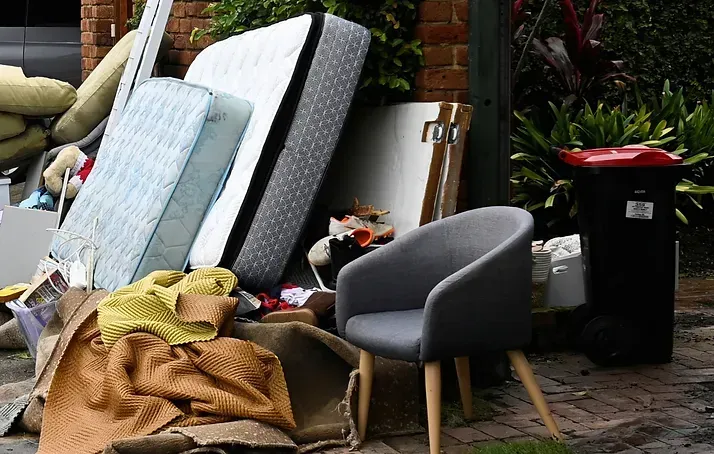
Full-Service Indoor Cleanup, Cleanouts and Junk Hauling
No need to worry about having the right tools, time, or expertise for your indoor junk removal needs. Elephants Dumpster Rental & Junk Removal in St. Petersburg offers professional indoor cleanout services that deliver top-tier results. Whether you need appliance removal, furniture removal, or mattress removal, our skilled team of junk removal and light demolition experts can handle it all. Ready to clear out your unwanted items? With just a call, you could be junk-free in as little as 24 hours!
Appliance Removal
For appliance removal services in St. Petersburg, Elephants Dumpster Rental & Junk Removal is your top choice. Whether you’re dealing with large appliances or smaller ones, our team handles it all.
When it’s time to replace your old or broken appliances, we’ll take care of the removal quickly and efficiently. For fast and hassle-free appliance removal, no one does it better than Elephants Dumpster Rental & Junk Removal.
Carpet Removal
Is your old carpet ready to go? Elephants Dumpster Rental & Junk Removal in St. Petersburg has you covered! We handle the entire process, so you don’t have to lift a finger or break a sweat. Getting rid of your old carpet has never been easier than with Elephants Dumpster Rental & Junk Removal!
Electronics Removal
Is an old TV or outdated electronics taking up space in your home? Disposing of electronic devices properly doesn’t have to be a hassle. Elephants Dumpster Rental & Junk Removal in St. Petersburg can clear out your unwanted electronics swiftly and responsibly, often within just 24 hours!
Furniture Removal
If your old furniture has seen better days, there’s no need to delay its removal any longer. Elephants Dumpster Rental & Junk Removal in St. Petersburg will handle the heavy lifting, hauling, and responsible disposal of your unwanted furniture, making sure to recycle and donate whenever possible.
Mattress Removal
Is your old mattress causing more than just restless nights? Don’t wait any longer to replace it. With Elephants Dumpster Rental & Junk Removal in St. Petersburg, getting rid of your old mattress is hassle-free. Simply give us a call, and we’ll handle the removal quickly and efficiently!
Indoor Cleanup in St. Petersburg, FL: Full-Service Interior Junk Removal and Debris Hauling
Indoor cleanup is the work of emptying, clearing, and hauling away everything inside a building — furniture, appliances, carpet, drywall scraps, boxes, clothing, paperwork, and general clutter — without you touching a single item. Elephants Dumpster Rental & Junk Removal handles indoor cleanup in St. Petersburg and throughout Pinellas County, from a single spare bedroom to a 40-unit apartment building turnover.
Outdoor hauling is simple: back the truck up, load, leave. Interior work is different. Our crews have to protect floors, fit oversized items through 30-inch doorways, carry loads down stairwells, respect elevator reservations in condo towers, and leave the space broom-clean for the next person who walks in. That is the part most people underestimate, and it is exactly the part we are built for.
What Counts as Indoor Cleanup?
We use the term broadly, because the jobs are genuinely varied. In a typical month our indoor cleanup crews handle:
- Whole-home cleanouts before a sale, closing, or move — see our house cleanout service.
- Single-room clear-outs: garages, attics, basements, closets, laundry rooms, and Florida rooms.
- Estate cleanouts after a death in the family — handled quietly and respectfully through our estate cleanout team.
- Hoarding recovery, which needs a slower, sorted, non-judgmental approach: hoarding cleanouts.
- Eviction and foreclosure turnovers for landlords and asset managers: eviction cleanouts and foreclosure cleanouts.
- Post-renovation debris removal — drywall, trim, cabinets, tile, and packaging left behind by contractors. Pairs with construction debris removal.
- Commercial interiors: offices, retail spaces, restaurants, and warehouses.
- Storage units that have outlived their usefulness: storage unit cleanout.
How an Indoor Cleanup Job Actually Runs
There is no mystery to our process, and knowing it up front makes the day go faster.
- Call or text 727-240-7033 and describe the space: how many rooms, what floor, elevator or stairs, and roughly what is inside. Photos help enormously.
- Get a flat, all-in quote. We price by the volume the load occupies in the truck, not by the hour, so a slow stairwell does not inflate your bill.
- We arrive with floor and doorway protection. Runners on hardwood and tile, corner guards on tight turns, and dollies for anything heavy.
- Sort as we go. Donatable furniture and housewares get set aside, scrap metal is separated for recycling, electronics are routed for electronics recycling, and only true waste goes to disposal.
- Sweep and walk through. You sign off on an empty, broom-clean room before we pull away.
Why Volume-Based Pricing Matters Indoors
Hourly pricing punishes you for the things you cannot control — a third-floor walk-up, a single narrow interior staircase, a condo that only allows service elevator access between 9 a.m. and 4 p.m. Because we quote on truck volume, the number on the estimate is the number you pay. If the load turns out smaller than expected, the price comes down. That is the whole point of a written, itemized quote before a single item moves.
Same-Day and Next-Day Indoor Cleanup
Closings get moved up. Inspections get scheduled with two days notice. A tenant leaves a unit full of furniture the night before a showing. We keep capacity open for exactly these situations — ask about same-day junk removal when you call. If it is one bulky object rather than a full room, single item pickup is usually the cheaper route.
Florida Law You Should Know Before Any Indoor Cleanup Involving Mold, Water Damage, or Renovation
Florida humidity means a surprising number of indoor cleanup calls start with the words “there might be mold.” The state regulates this area specifically, and it matters both for your safety and for who is legally allowed to do the work. Here is the plain-English version, with the actual statutes cited so you can verify every word.
Florida Licenses Mold Assessors and Mold Remediators — Above 10 Square Feet
Florida Statutes sections 468.84 through 468.8424 create a licensing scheme administered by the Department of Business and Professional Regulation (DBPR). The definitions in F.S. 468.8411 are the key to the whole chapter:
- Mold assessment means sampling and evaluation to form a hypothesis about the origin, identity, location, and extent of mold growth greater than 10 square feet.
- Mold remediation means the removal, cleaning, sanitizing, demolition, or other treatment of mold or mold-contaminated matter greater than 10 square feet.
That 10-square-foot line — roughly a 3 ft by 3 ft patch — is the threshold that turns a cleaning task into licensed professional work. The Florida Department of Health points residents to that same statutory range and confirms DBPR is the licensing authority.
The Assessor and the Remediator Cannot Be the Same Company
This is the rule most homeowners have never heard, and it protects you from a serious conflict of interest. Under F.S. 468.8419, a mold assessor may not perform mold remediation on a structure their company assessed within the last 12 months, and a remediator may not assess a structure they remediated within the last 12 months. The statute also prohibits:
- Paying or accepting referral fees between assessors and remediators.
- Inspecting for a fee any property in which the assessor has a financial or transfer interest.
- Contingency-fee assessments, where the inspector gets paid based on what the inspection concludes.
Penalties escalate: a second-degree misdemeanor for a first violation, a first-degree misdemeanor for a second, and a third-degree felony for a third or subsequent violation. Licensed remediators must also complete at least 14 hours of continuing education every two years under F.S. 468.8416. If a company offers to both test and remediate your mold in one visit, that is your cue to ask for their license number.
What EPA Says About Who Should Do the Cleanup
The U.S. EPA mold cleanup guidance lines up with Florida’s threshold. EPA advises that if the moldy area is less than about 10 square feet, most people can handle it themselves. Above that — or after significant water damage — EPA directs you to its Mold Remediation in Schools and Commercial Buildings protocol and to hire someone with real mold experience. EPA adds several warnings worth repeating:
- Act quickly. Mold damages what it grows on; the longer it grows, the worse the damage.
- Porous materials often cannot be saved. Carpet, pad, and ceiling tiles frequently have to be discarded because mold fills the crevices.
- Do not run a contaminated HVAC system — it can spread spores through the entire building.
- Sewage or contaminated water requires a professional with experience in that specific category of loss.
- Never paint or caulk over mold. The paint will peel and the problem continues underneath.
Where Our Crew Fits — and Where It Does Not
We want to be completely straight with you about scope. Elephants is a hauling and cleanout company, not a licensed mold assessor or mold remediator. What that means in practice:
- We do the demolition and haul-off side of a water or mold loss — tearing out and removing soaked carpet and pad, ruined furniture, wet drywall, baseboard, and cabinetry. See drywall demolition and interior demolition.
- We coordinate around your licensed remediator’s containment. If a DBPR-licensed remediator has set containment and negative air, we work to their scope and their sequence, hauling material out as they release it.
- We will tell you to stop and call an assessor if we open a wall and find visible growth well past that 10-square-foot line. That is not us upselling — it is us staying inside the law.
The regulatory information on this page is general guidance drawn from Florida Statutes, the Florida Department of Health, and the U.S. EPA. It is not legal advice, and requirements change. Verify current rules with DBPR and your local building department before starting work.
Room-by-Room Indoor Cleanup Guide for St. Petersburg Homes
Every room fails in its own way. Here is what our crews actually find, room by room, and how we handle each one during an indoor cleanup.
Garage — The Heaviest Room in the House
Garages hide the worst weight: bags of hardened concrete mix, engine parts, wheel and tire stacks, paint cans, and shelving anchored into block wall. Two things slow a garage down — hazardous materials that cannot go in the truck and fasteners drilled into masonry. We bring impact drivers and masonry bits so built-in shelving comes out cleanly, and we separate paint, solvents, pool chemicals, and automotive fluids for you to take to a county household hazardous waste facility. Full details on our garage cleanout page.
Attic — Heat, Insulation, and Joist Discipline
A Pinellas attic in July can pass 130°F. We work attics early in the morning, in short rotations, with lights and respirators. The real hazard is not the heat but the ceiling below: step off a joist and you are through the drywall. Old boxes, discarded holiday decor, abandoned ductwork, and displaced insulation all come out by hand, bagged at the hatch so nothing sheds through the house. See attic cleanouts.
Kitchen — Appliances, Cabinets, and Refrigerant
Kitchens combine three separate problems. Appliances are heavy and often connected to gas, water, or 240-volt circuits. Cabinets are screwed to studs and sometimes tiled into the backsplash. And refrigerators and freezers contain regulated refrigerant.
That last point is federal law, not a preference. Section 608 of the Clean Air Act (40 CFR Part 82, Subpart F) establishes the National Recycling and Emission Reduction Program and prohibits intentionally venting ozone-depleting refrigerants and their substitutes, including HFCs, while servicing, maintaining, repairing, or disposing of refrigeration and air conditioning equipment. Refrigerant has to be recovered by a certified technician before the shell is scrapped — which is why we route fridges, freezers, window units, and wine coolers to processors set up for recovery rather than dropping them at a landfill face. See refrigerator removal and appliance removal. For a full gut, start at kitchen demolition.
Bathroom — Small Room, Highest Damage Risk
Bathrooms are where hidden water damage shows up first: soft subfloor at the toilet flange, blistered vanity kick, black staining behind the tub surround. Cast-iron tubs run 250 to 500 pounds and frequently have to be broken down in place rather than carried out whole. Tile and mortar bed are dense — a single small bathroom can produce more weight than an entire bedroom of furniture. See bathroom demolition.
Bedrooms and Living Areas — Bulk Without Weight
This is the volume half of the job: sofas, sectionals, mattresses and box springs, dressers, entertainment centers, and televisions. Sectionals and sleeper sofas are the usual doorway problem. We measure first, remove legs and feet, and if a piece genuinely will not clear the opening we cut it down inside the room rather than damaging your casing. If bed bugs are involved, tell us in advance — those items get wrapped and sealed before they leave the room. See bed bug furniture removal.
Home Office and Media Rooms — Electronics and Paper
Old towers, CRT monitors, printers, servers, UPS batteries, and boxes of records. Electronics do not belong in household trash — they contain lead, mercury, cadmium, and lithium cells. We separate all of it for electronics recycling. Loose paper and cardboard get baled out separately through cardboard recycling rather than buried.
Florida Room, Lanai, and Screened Porch
Half-indoor spaces collect the worst of both worlds: sun-rotted wicker, rusted patio sets, dead potted plants, pool equipment, and a decade of storage that migrated out of the garage. Rust makes fasteners unusable, so aluminum and steel frames usually come apart with a grinder and go straight into the scrap metal stream.
Stairs, Elevators, and Condo Buildings
St. Petersburg has a lot of mid-rise and high-rise inventory, and building rules govern the job as much as the contents do. Before we schedule a condo indoor cleanup, we ask you to confirm three things with your association: the service elevator reservation window, whether floor and wall protection is required in common areas, and whether a certificate of insurance must be on file with management. Getting those three answers in advance is the single biggest predictor of whether a high-rise job finishes in one trip.
Oversized Single Items
Some indoor items are jobs unto themselves. Upright and grand pianos need multiple people and a board. Slate pool tables come apart into 300-pound slabs. Treadmills and home gyms are usually assembled inside the room and must be disassembled to leave it. Hot tubs in enclosed lanais almost always require cutting. Tell us which of these you have when you call, because they change the crew size, not just the price.
What We Take, What We Cannot Take, and Where It All Goes
A big part of doing indoor cleanup honestly is telling you what has to stay behind. Federal and state rules restrict certain materials from ordinary solid waste, and no reputable hauler will put them in a truck.
Yes — Standard Indoor Cleanup Items
- Furniture of every kind: sofas, sectionals, recliners, dressers, tables, bed frames, headboards, office chairs.
- Mattresses and box springs, any size, wrapped when requested.
- Appliances: refrigerators, freezers, ranges, dishwashers, washers, dryers, microwaves, water heaters.
- Electronics: televisions, monitors, towers, laptops, printers, stereo equipment, cabling.
- Carpet, pad, vinyl plank, laminate, and tack strip.
- Renovation debris: drywall, trim, doors, cabinets, countertops, tile, and packaging.
- Household clutter: clothing, linens, toys, books, kitchenware, decor, and general boxed contents.
- Scrap metal, exercise equipment, patio furniture, grills with tanks removed.
No — Materials That Require a Different Path
- Paint, stain, solvents, thinners, and adhesives.
- Pesticides, herbicides, and pool chemicals.
- Motor oil, gasoline, antifreeze, and brake fluid.
- Automotive and lithium-ion batteries.
- Fluorescent tubes, CFL bulbs, and anything containing mercury.
- Propane cylinders and pressurized tanks.
- Ammunition, flares, and other explosives.
- Medical sharps, prescription medication, and biohazardous waste.
- Suspected asbestos-containing material — popcorn ceiling texture, 9×9 floor tile, old pipe wrap. This requires licensed abatement and notification before disturbance.
Pinellas County Household Hazardous Waste — Free for Residents
The good news is that Pinellas County takes almost everything on that second list at no charge. Per Pinellas County Household Hazardous Waste Collection:
- HHW Collection Center — 2855 109th Avenue N., St. Petersburg, open select weekdays, 7 a.m. to 5 p.m.
- HHW North Collection Center — 29582 U.S. 19 N., Clearwater, open select Saturdays, 9 a.m. to 2 p.m.
- Service is free to Pinellas County households. Businesses are not eligible and must use a commercial hazardous waste vendor.
Always confirm the current operating calendar before you drive over — both sites run on published date lists rather than every day.
Where the Rest Goes: Pinellas Solid Waste Disposal Complex
True waste from our indoor cleanup loads is delivered to the county Solid Waste Disposal Complex at 3095 114th Avenue N., St. Petersburg, FL 33716, phone (727) 464-7500. The scalehouse operates Monday through Friday 6 a.m. to 6 p.m. and Saturday 7 a.m. to 5 p.m., closed Sunday.
Current published rates from the Pinellas County disposal fee schedule:
- $58.86 per ton for standard solid waste.
- $4.25 per load flat rate for cars.
- $11.75 per load flat rate for pickup trucks and vans.
- Larger vehicles and any trailer are charged per ton by scale weight.
- The flat rate is void if the vehicle has been modified to increase capacity.
Pinellas sends most residential waste through a waste-to-energy facility before anything reaches Bridgeway Acres Landfill. Combustion reduces the volume of processed waste by roughly 90 percent, which is why the county describes landfilling as the last resort in the EPA waste management hierarchy — reduce, reuse, recycle, recover energy, then dispose.
The City of St. Petersburg Free Special Pickup — Use It Where It Fits
Not every indoor cleanup needs a truck. If you are a City of St. Petersburg sanitation customer — one of roughly 76,000 household accounts — the city offers a free special pickup for a defined list of bulk items. Per the city’s special pickup program, published free limits include:
- Furniture, carpet, and appliances: up to 3 cubic yards.
- Car batteries: maximum 5. Car tires: maximum 5.
- Doors: maximum 2. Windows: maximum 2. Kitchen cabinets: maximum 2.
- Empty 20-pound propane tanks: maximum 2.
Beyond the free list, the city charges $25.65 per cubic yard. Requests go through SeeClickFix or 727-893-7398, and material must be placed at your normal collection spot. The city also runs five free brush drop-off sites for residents with proof of residency, plus periodic Household Chemical Collection Events.
Our honest advice: if your entire cleanup fits inside those caps and you can wait for the city’s schedule, use the city program and keep your money. Call us when the volume is larger, the timeline is short, the items are heavy or restricted, or nobody is available to carry things to the curb. If you would rather load at your own pace over several days, a roll-off dumpster rental is usually the cheapest option per cubic yard — a 10-yard handles a single room, a 20-yard covers most whole-home cleanouts, and a 30-yard suits full renovations. Ongoing weekly service is covered on our trash pickup page.
Indoor Cleanup for Landlords, Property Managers, and Families Settling an Estate
A large share of our indoor cleanup work in St. Petersburg comes from three situations where the contents of a property are not simply yours to throw away. Getting the legal sequence right protects you from a claim later, so it is worth understanding before the truck shows up.
Eviction Cleanouts: What Florida Law Actually Requires
Under Florida Statute 83.62, after a judgment for possession the clerk issues a writ of possession and the sheriff puts the landlord back in possession after 24 hours notice conspicuously posted on the premises. The statute is explicit that Saturdays, Sundays, and legal holidays do not stay that 24-hour period.
Once the sheriff executes the writ — or at any time after — the landlord or the landlord’s agent may remove personal property found on the premises to or near the property line. The landlord may also ask the sheriff to stand by and keep the peace while locks are changed and property is removed; the sheriff may charge a reasonable hourly rate for that standby, paid by the requesting party.
The practical takeaway for scheduling: we cannot enter and remove contents before the writ is executed. What we can do is have a crew staged and ready for the same morning, so the unit is emptied, swept, and photo-documented within hours rather than sitting exposed for days. That is the core of our eviction cleanout service.
Property Left Behind After a Tenancy Ends
An eviction is not the only way a unit ends up full. When a tenant simply leaves belongings behind, Florida Statute 715.104 requires the landlord to give written notice to the former tenant and to any other person the landlord reasonably believes owns the property. The notice must describe the property well enough for the owner to identify it — and the statute specifically warns that the liability protection in s. 715.11 does not cover property that was left out of the description, with special treatment for locked or sealed trunks, boxes, and containers.
The statutory notice forms in F.S. 715.105 and F.S. 715.106 set the deadline you must give the owner to reclaim the items: not fewer than 10 days after the notice is personally delivered, or not fewer than 15 days after the notice is deposited in the mail. The owner also has to pay reasonable storage and advertising costs to get the property back.
What this means for your cleanout date: build the 10-day or 15-day window into your turnover schedule, not around it. We routinely inventory and photograph contents on day one, move them to your storage location, then return to haul the unclaimed remainder once the statutory clock has run. That two-visit structure is the safest pattern for property management clients and apartment communities.
Again — this is general information, not legal advice. Consult your attorney about your specific eviction or abandoned-property situation before disposing of anything.
Foreclosure and Bank-Owned Property Cleanouts
REO and pre-listing work has its own rhythm: a fixed scope, a required photo set, and a hard deadline tied to a listing date. We produce time-stamped before, during, and after photos of every room, a written itemized scope, and a broom-clean handoff so the asset manager has documentation for the file. See foreclosure cleanouts.
Estate Cleanouts: Slow Down, Sort First
Clearing a parent’s home is not a logistics problem, it is a family one. Our approach on an estate cleanout is deliberately slower:
- Nothing leaves until you say so. We stage questionable items in one room for a final walk-through instead of making the call ourselves.
- We flag the things people lose. Photographs, documents, jewelry boxes, military items, coins, and firearms get set aside immediately and handed to you directly.
- Donation first. Usable furniture, housewares, linens, and clothing are separated for donation rather than disposal whenever the condition allows.
- We can work in phases across multiple days or weekends when family members are traveling in.
Related situations we handle the same way: senior housing cleanouts, assisted living cleanouts, and downsizing moves.
Hoarding Recovery Requires a Different Playbook
Hoarding conditions are the most demanding indoor cleanup we do, and the difference is not the volume — it is the pace and the trust. Blocked egress, compromised floors, spoiled food, animal waste, and pest activity are common, and every layer has to be sorted rather than shoveled because valuables and documents are genuinely buried in it. We work with the resident or family present, in agreed zones, at a speed the person can tolerate. If conditions turn out to involve biohazard, sewage, or mold beyond the 10-square-foot statutory threshold, we stop and bring in the appropriate licensed specialist before continuing. Details on our hoarding cleanout page.
Commercial Interiors and Tenant Improvement Turnovers
Landlords delivering vanilla-shell space to a new tenant have a deadline and a punch list. We strip cubicle systems, office furniture, fixtures, racking, and signage, then coordinate with your contractor for light demolition and final debris haul. See business junk removal and our commercial services overview.
Indoor Cleanup Service Across St. Petersburg, Clearwater, Tampa and Pinellas County
Our service map has three anchors: St. Petersburg, Clearwater and Tampa. Those three cities absorb most of our indoor cleanup service work, and everything in between them across Pinellas County is covered on the same schedule and the same price list.
St. Petersburg, FL
St. Petersburg gets our fastest response on indoor cleanup service simply because we are already here. We cover downtown, the Grand Central District, Historic Roser Park, Bartlett Park, Euclid St. Paul, Meadowlawn and the Gateway corridor. City bulk curbside pickup is free if you can wait for it, and we will tell you when that is the smarter option. More on our St. Petersburg junk removal coverage.
Clearwater, FL
Clearwater is our second-heaviest market. indoor cleanup service runs from Countryside and Morningside out to Island Estates, Sand Key and Clearwater Beach. Beach and island buildings almost always mean elevator reservations, certificates of insurance and loading dock windows — we carry the paperwork and book the elevator before the crew rolls. See the full Clearwater service page.
Tampa, FL
We serve Tampa across the bay every week. indoor cleanup service runs through South Tampa, Davis Islands, Beach Park, Virginia Park, Seminole Heights, Tampa Heights, Riverside Heights, Westchase and New Tampa. Tampa sits in Hillsborough County, which runs its own disposal system, so Tampa loads tip at Hillsborough facilities rather than the Pinellas plant — we quote that in up front so the price does not move later. Details on our Tampa coverage.
The Rest of Pinellas County
Between and around the big three we cover the whole county. Inland that means Largo, Pinellas Park, Seminole, Dunedin, Palm Harbor, Tarpon Springs, Safety Harbor, Oldsmar and East Lake. On the water we run St. Pete Beach, Treasure Island, Madeira Beach, Indian Rocks Beach, Indian Shores, Redington Beach, Redington Shores, North Redington Beach, Clearwater Beach and Tierra Verde. The smaller municipalities count too: Gulfport, Kenneth City, South Pasadena, Belleair, Belleair Beach, Belleair Bluffs and Belleair Shore. On the Tampa side we also work Westchase and the Gandy corridor. Full county detail is on the Pinellas County page.
Not sure whether your address is inside the line? Call 727-240-7033 and ask. We would rather tell you honestly that a job is outside our range than take a deposit and cancel on you.
Where We Provide Indoor Cleanup Across Pinellas County and Tampa Bay
What does indoor cleanup include?
Indoor cleanup covers everything inside the walls of a home or business: furniture, mattresses, appliances, electronics, carpet and pad, cabinets, renovation debris, clothing, boxes, and general clutter. Our crew carries it all out, so you do not have to move anything to the curb. We finish by sweeping the space broom-clean and walking through it with you before we leave.
How much does indoor cleanup cost in St. Petersburg?
We price indoor cleanup by the volume the load takes up in the truck, not by the hour, and we give you a flat written quote before anything moves. That means stairs, tight hallways, long carries, and slow service elevators do not raise your bill. Call or text 727-240-7033 with photos or a room count and we will quote it for you at no charge.
Do I have to move anything to the curb before you arrive?
No. Full-service indoor cleanup means our crew does the lifting and carrying from wherever the items sit, including upstairs bedrooms, attics, garages, and third-floor apartments. All you need to do is point at what goes. If you want to sort first, that is fine too, but it is never required.
Can you do an indoor cleanup the same day I call?
Often yes. We hold capacity open for closings that move up, inspections scheduled on short notice, and tenant turnovers that have to be showing-ready tomorrow. Same-day and next-day slots depend on crew availability and how large the job is, so call 727-240-7033 early in the day for the best chance.
Do you remove mold during an indoor cleanup?
Elephants is a hauling and cleanout company, not a licensed mold assessor or mold remediator. Florida Statutes 468.84 through 468.8424 license that work through DBPR, and both mold assessment and mold remediation are defined as applying to growth greater than 10 square feet. We remove and haul the wet or damaged materials, such as carpet, pad, drywall, and furniture, and we coordinate around a licensed remediator’s containment. If we uncover growth well past that 10 square foot threshold, we stop and tell you to bring in a licensed assessor.
What can you not take during an indoor cleanup?
We cannot haul paint, solvents, pesticides, pool chemicals, motor oil, gasoline, antifreeze, automotive and lithium-ion batteries, fluorescent tubes and other mercury items, propane cylinders, ammunition, medical sharps, biohazardous waste, or suspected asbestos-containing material. Pinellas County accepts most of those free of charge from residents at the HHW Collection Center at 2855 109th Avenue N. in St. Petersburg and the HHW North Collection Center at 29582 U.S. 19 N. in Clearwater. Businesses are not eligible for those county sites.
Do you take refrigerators, freezers, and window air conditioners?
Yes. Because those units contain regulated refrigerant, we route them to processors set up for recovery instead of dropping them at a landfill face. Section 608 of the Clean Air Act, at 40 CFR Part 82 Subpart F, prohibits intentionally venting ozone-depleting refrigerants and their substitutes, including HFCs, while servicing or disposing of refrigeration and air conditioning equipment.
Should I use the free City of St. Petersburg special pickup instead?
If your items fit the city’s free caps and you can wait for their schedule, use the city program and keep your money. The published free limits include up to 3 cubic yards of furniture, carpet, and appliances, a maximum of 5 car batteries, 5 car tires, 2 doors, 2 windows, 2 kitchen cabinets, and 2 empty 20-pound propane tanks. Beyond the free list the city charges 25.65 dollars per cubic yard, and you must place items at your normal collection spot. Call us when the volume is larger, the timeline is short, the items are heavy or restricted, or nobody can carry things out to the curb.
How do you handle an eviction or abandoned property cleanout?
We schedule around the legal sequence rather than ahead of it. Under Florida Statute 83.62 the sheriff puts the landlord back in possession after 24 hours notice posted on the premises, and Saturdays, Sundays, and legal holidays do not stay that period. Where a former tenant left property behind, Florida Statutes 715.104 through 715.106 require written notice describing the property and a reclaim deadline of not fewer than 10 days after personal delivery or 15 days after mailing. We commonly inventory and photograph on day one, move items to your storage location, and return to haul the unclaimed remainder once the statutory window closes. This is general information, not legal advice.
Do you provide indoor cleanup outside St. Petersburg?
Yes. We cover Pinellas County and the surrounding Tampa Bay area, including Clearwater, Largo, Pinellas Park, Seminole, Dunedin, Palm Harbor, Tarpon Springs, Safety Harbor, Oldsmar, St. Pete Beach, Treasure Island, Madeira Beach, Gulfport, Kenneth City, South Pasadena, Tierra Verde, Belleair, Indian Rocks Beach, Tampa, and Westchase. Call 727-240-7033 to confirm scheduling for your address.
Do you offer indoor cleanup service in Tampa, FL?
Yes. Tampa is a regular part of our route, not a special trip. We cross the Howard Frankland, Gandy and Courtney Campbell bridges for indoor cleanup service in South Tampa, Hyde Park, Palma Ceia, Seminole Heights, Ybor City, Westchase, Carrollwood, Temple Terrace and New Tampa. Tampa is in Hillsborough County, so loads tip at Hillsborough facilities instead of the Pinellas plant. That difference is already in the number we quote you — there is no bridge surcharge bolted on at the end.
How fast can you get to Clearwater for indoor cleanup service?
Clearwater is our second-busiest market, so same-day or next-day is normal. Jobs in Countryside, Skycrest, Morningside and the US-19 corridor are straightforward. Anything on Clearwater Beach, Sand Key or Island Estates we schedule early in the morning, because the Memorial Causeway and beach parking will wreck an afternoon window. If the building needs a certificate of insurance or a reserved service elevator, tell us when you book and we handle it.
Which cities do you serve besides St. Petersburg, Clearwater and Tampa?
All of Pinellas County. Inland that is Largo, Pinellas Park, Seminole, Dunedin, Palm Harbor, Tarpon Springs, Safety Harbor, Oldsmar and East Lake. On the water it is St. Pete Beach, Treasure Island, Madeira Beach, Indian Rocks Beach, Indian Shores, Redington Beach, Redington Shores, North Redington Beach, Clearwater Beach and Tierra Verde. We also cover Gulfport, Kenneth City, South Pasadena, Belleair, Belleair Beach, Belleair Bluffs and Belleair Shore, plus Westchase and the Gandy corridor on the Hillsborough side.
READY WHEN YOU ARE
GET A FLAT PRICE TODAY
Dumpster delivered or junk gone — often the same day. Call or text 727-240-7033, text photos for a price in minutes, or book online in about two minutes. Flat pricing, dump fees included, and a real person on the phone 24/7.